What hiring managers actually look for
Hiring managers evaluating candidates without experience focus on different signals than they use for experienced applicants:
-
1
Transferable skills signal readiness. Skills developed through education, hobbies, volunteering, or personal life often map directly to job requirements. Communication, organization, problem solving, and technology proficiency all transfer across contexts.
-
2
Self-directed learning shows motivation. Candidates who have pursued certifications, completed online courses, or built projects on their own demonstrate the kind of initiative that employers associate with high performers.
-
3
Presentation reflects work ethic. A polished resume tells hiring managers that you will bring the same care and attention to the job itself. Formatting, spelling, and structure are all evaluated, consciously or not.
If your resume communicates these things in the first 7-second scan, you'll make it to the detailed read. Everything below is about making that happen.
How to structure your resume, section by section
The order matters. Here's what a strong resume with no experience looks like from top to bottom:
1. Contact header
Keep this clean and professional. Full name, email, phone, and city and state. Add LinkedIn only if your profile is complete and professional.
2. Summary or objective
With no experience, your objective statement is critical. It tells employers what you are pursuing and why they should consider you. Anchor it with a skill, a qualification, or a relevant accomplishment from any context.
Strong: "Resourceful and organized community college student with hands-on event planning experience from coordinating three campus fundraisers and strong proficiency in spreadsheet management. Seeking a part-time data entry clerk position to apply analytical and organizational strengths."
3. Education
When experience is missing, education becomes your anchor. Expand this section with relevant courses, projects, honors, GPA, study abroad, and extracurricular involvement.
4. Skills
This section does heavy lifting on a no experience resume. Organize skills into clear categories and focus on competencies that appear in job postings for your target roles.
Technical: Microsoft Excel · Google Sheets · Canva · WordPress
Professional: Written Communication · Research · Data Organization · Time Management
5. Experience / Activities / Projects
Rename this section to 'Relevant Experience' or 'Projects and Activities' to broaden what you can include. Volunteer work, personal projects, freelance tasks, and academic group work all belong here.
Strong: "Volunteer Sorting Lead, San Diego Regional Food Bank (Jan 2025 to Present). Supervised a team of 8 volunteers during weekly sorting sessions, processing an average of 2,000 pounds of donated food per shift and reducing waste by implementing a new quality inspection process."
6. Additional sections
Certifications, languages, awards, and professional affiliations add depth. A Google Analytics certification, CPR training, or fluency in a second language all strengthen your resume meaningfully.
Key skills to include
Without job experience to demonstrate competence, your skills section is where employers look first. Focus on skills you can genuinely back up with examples.
Tip: Organize skills into two or three categories (Technical, Professional, Language) to make the section easier to scan. This also helps you fill more space on the page.
Resume summary examples you can steal
Use one as a starting point, then swap in your own technologies, numbers, and achievements.
"Dean's list biology student with research experience analyzing water quality data using Excel and statistical software. Seeking a part-time lab assistant position to apply analytical skills and contribute to ongoing departmental research projects."
Why it works: It leads with academic distinction, names specific tools, and connects the experience to the target position.
"Highly organized professional with 10 years of experience managing family logistics, budgets, and schedules. Skilled in appointment coordination, vendor communication, and event planning for groups up to 50. Seeking an entry level office administrator role."
Why it works: It reframes household management into business-relevant terms with quantified details.
"Committed community volunteer with 500+ hours of service across three organizations, including food distribution logistics, youth mentoring, and fundraising event coordination. Looking for an entry level nonprofit program assistant position."
Why it works: It quantifies volunteer commitment and spreads experience across multiple relevant areas.
"Self-taught graphic designer proficient in Canva, Figma, and Adobe Photoshop with a portfolio of 20+ client projects including logos, social media graphics, and event flyers. Seeking an entry level junior designer position at a marketing agency."
Why it works: It quantifies the portfolio, lists specific tools, and targets a clear role and industry.
Writing strong experience bullets
Every bullet point should answer: "What did you do, and why did it matter?" Use this formula:
Before and after examples:
Helped organize a charity event.
Planned and executed a charity auction with 150 attendees, coordinating 30 donated items, managing bid tracking, and raising $8,200 for the local children's hospital.
Made social media posts for a friend's business.
Designed and published 45 Instagram posts over three months for a small bakery, increasing the account's follower count from 200 to 1,100 and driving a 60% increase in weekend foot traffic.
Took a class about databases.
Completed a 14 week database management course, building a fully normalized relational database in SQL as a capstone project that received the highest grade in the class.
Strong action verbs for resume with no experience resumes:
Built · Designed · Organized · Planned · Researched · Managed · Created · Coordinated · Developed · Produced · Published · Launched · Completed · Facilitated · Generated · Maintained · Presented
7 mistakes that get resume with no experience resumes rejected
Apologizing for lack of experience
Never write 'I know I don't have experience, but...' anywhere on your resume or cover letter. Focus entirely on what you do bring to the table.
Leaving sections empty
A resume with empty space looks incomplete. Use projects, coursework, certifications, and volunteer work to fill every section with relevant content.
Listing only soft skills with no evidence
Saying 'strong communicator' means nothing without context. Back every skill claim with a bullet point that shows how you used that skill and what resulted.
Using a two-page resume
Without work experience, there is no reason to exceed one page. If your content is spilling over, you are including material that does not belong.
Including irrelevant personal information
Hobbies, favorite movies, and personal beliefs do not help your candidacy. Keep every line focused on professional qualifications and transferable skills.
Using the same resume for every application
Each job posting emphasizes different skills and qualifications. Adjust your skills, summary, and bullet points for every application.
Choosing form over function
Creative layouts with multiple columns, images, and infographics often fail in applicant tracking systems. Choose a simple, clean format that puts content first.
What to do if you have no professional experience
This entire guide is built for people with no experience, but here are four accelerated strategies to build resume content quickly:
Complete a weekend certification
Google Digital Garage, HubSpot Academy, and freeCodeCamp offer certifications that take days, not months. A single certification gives you a skills entry, a bullet point, and proof of initiative.
Launch a micro-project
Create a blog, design a mock marketing campaign, build a simple app, or start a small online store. Document the process and results for your resume.
Volunteer strategically
Choose volunteer roles that align with your target career. If you want office work, volunteer for a nonprofit's administrative team. If you want marketing, manage a charity's social media.
Reframe everything you have done
Managing a household budget is financial planning. Coordinating family schedules is project management. Mentoring younger students is training and development. Frame your real life activities using professional language.
Frequently asked questions
Is it possible to get hired with no experience?
Yes. Many roles are specifically designed for candidates without experience, including entry level positions, internships, apprenticeships, and training programs. Employers hiring for these roles evaluate potential, not track record.
What should I put in the experience section if I have none?
Replace the experience section with a 'Projects and Activities' or 'Relevant Experience' section. Include volunteer work, academic projects, personal initiatives, and any informal work you have done.
How important are certifications on a no experience resume?
Very important. Certifications prove that you have studied and passed an assessment in a specific area. They fill resume space, demonstrate initiative, and give you concrete skills to list.
Should I mention that I have no experience in my cover letter?
Never. Your cover letter should focus on your enthusiasm for the role, your relevant skills and qualities, and specific reasons you are interested in that company. Let your qualifications speak for themselves.
What is the biggest mistake people make on a no experience resume?
Submitting a nearly empty document. Every person has transferable skills and experiences from school, community, hobbies, and personal life. The goal is to translate those into professional language and present them with the same structure used for formal work experience.
Skip the blank page
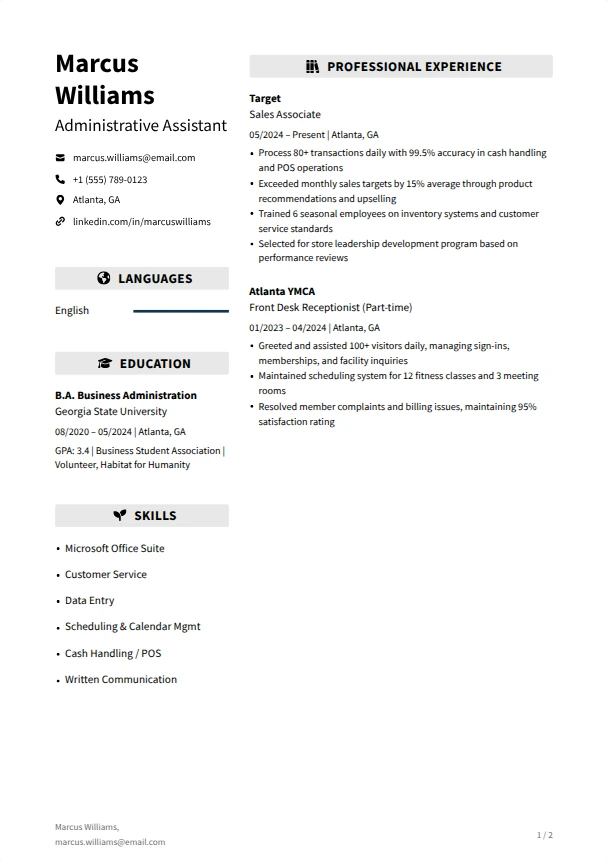
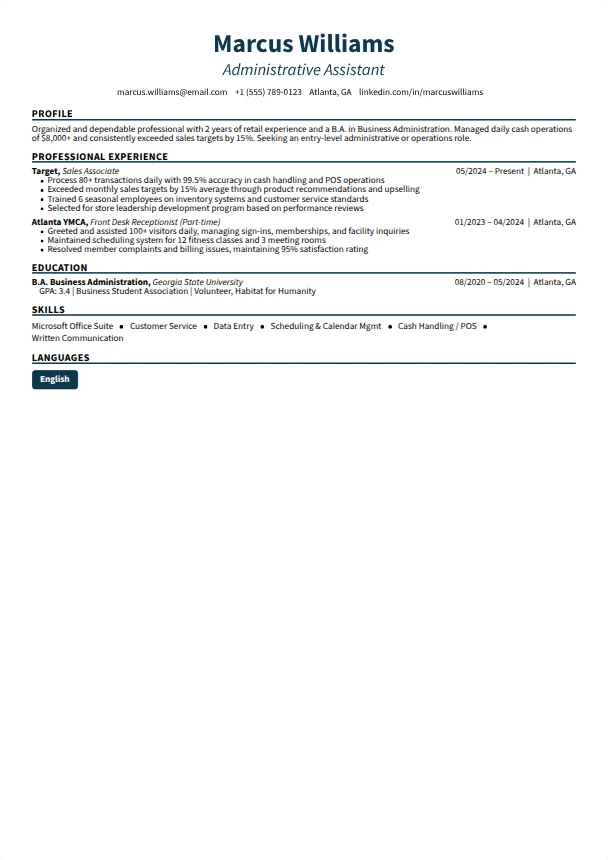
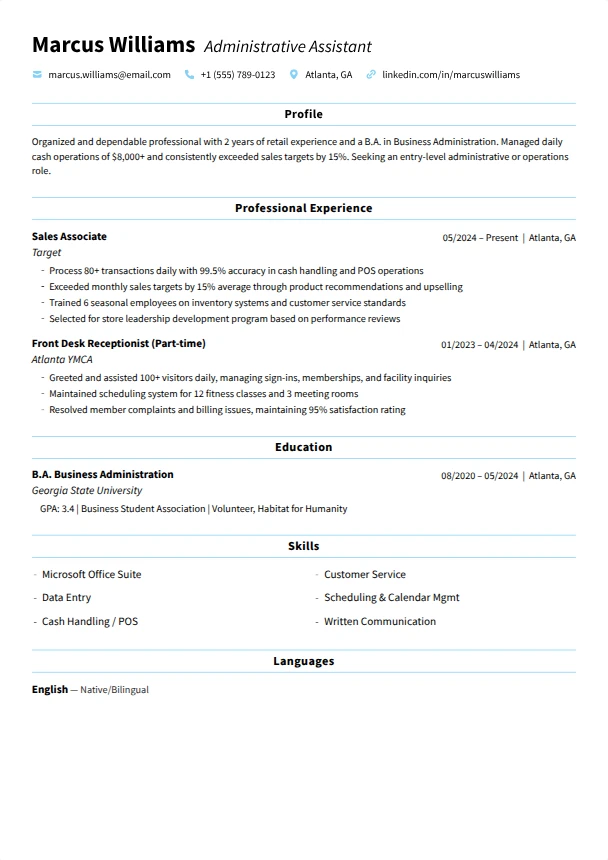
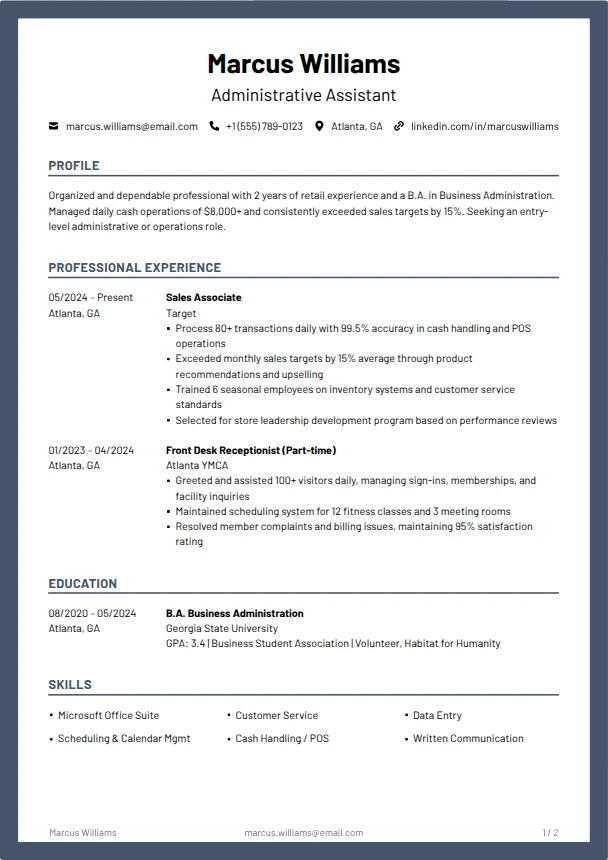
Open a complete, filled-in entry-level resume in our free builder. Swap in your own details, keep the wording that fits, and download as PDF, free.
Build your resume now
Pick a template built for candidates without experience, fill in your details, and download a polished resume in minutes. Your background is more impressive than you think.
Start Building, It's FreeRelated resume guides
Comprehensive guide to writing resumes for professional entry level positions.
Step by step walkthrough for anyone creating their very first resume.
Build a resume using school activities, academics, and volunteer work.
Resume tips for recent graduates transitioning from school to career.
More resume examples: