What hiring managers actually look for
These examples are designed around the three things hiring managers notice first on inexperienced candidates' resumes:
-
1
Content quality over quantity. Four well written, specific bullet points are more effective than ten generic ones. These examples show you how to pack meaningful detail into every line.
-
2
Strategic section ordering. When work history is absent, the order of sections matters. These examples lead with the strongest available material, whether that is education, certifications, or a substantial project.
-
3
Professional tone throughout. The language in these examples mirrors how experienced professionals describe their work. This signals to hiring managers that the candidate understands workplace expectations even without having worked in one.
If your resume communicates these things in the first 7-second scan, you'll make it to the detailed read. Everything below is about making that happen.
How to structure your resume, section by section
The order matters. Here's what a strong resume with no experience examples looks like from top to bottom:
1. Contact header
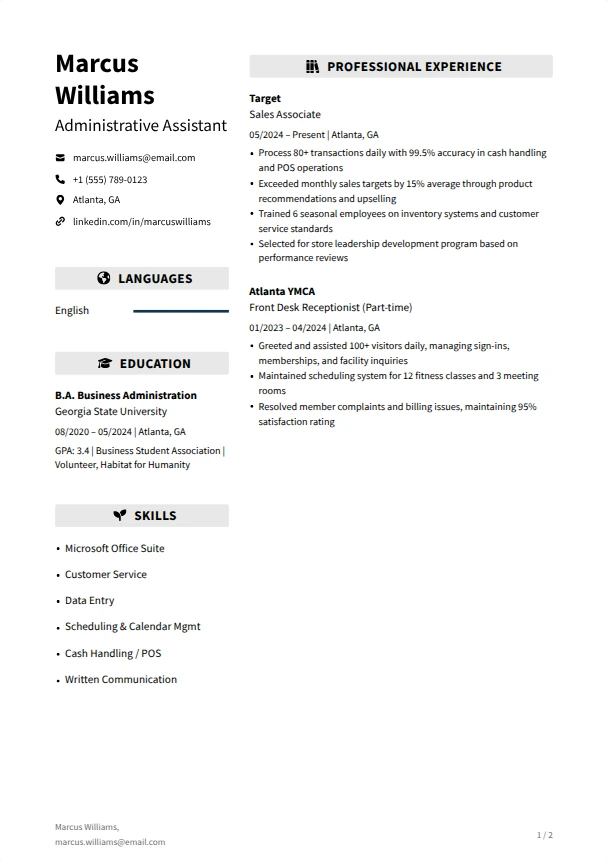
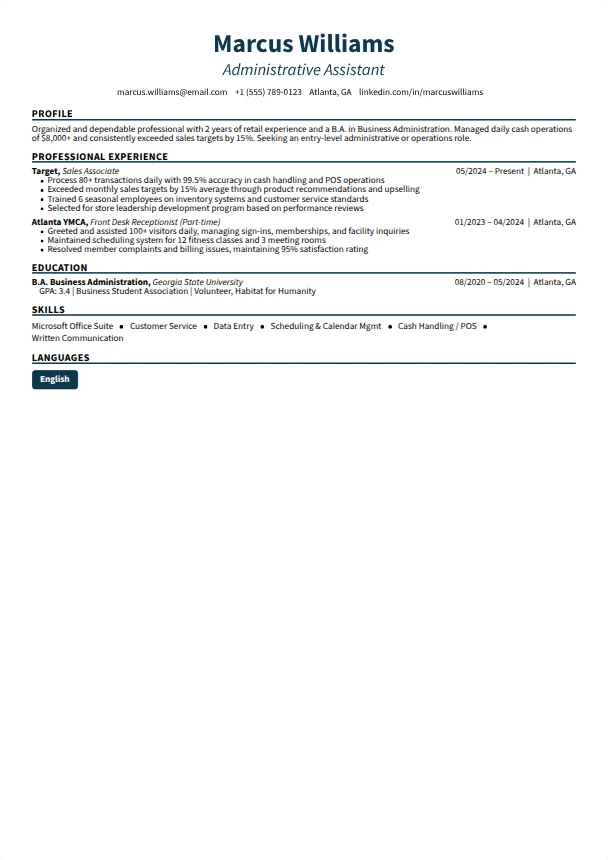
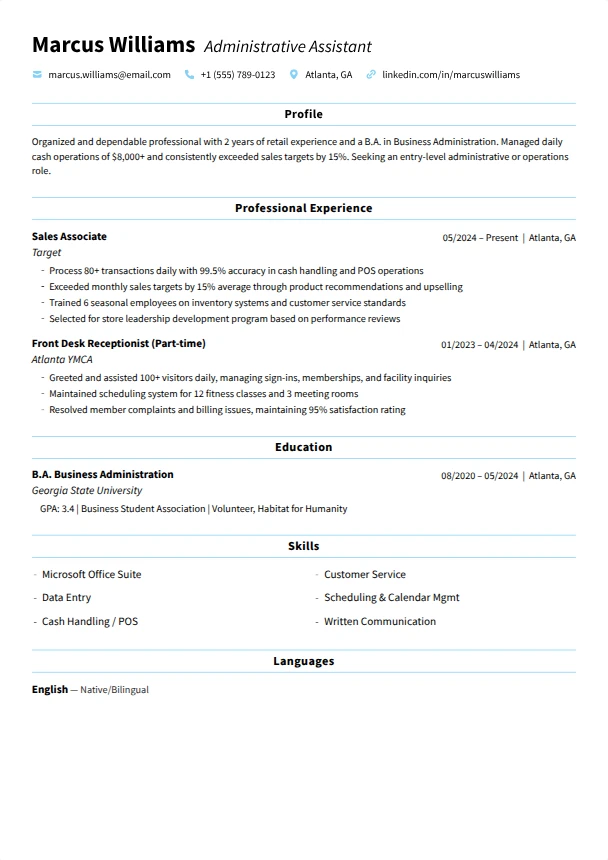
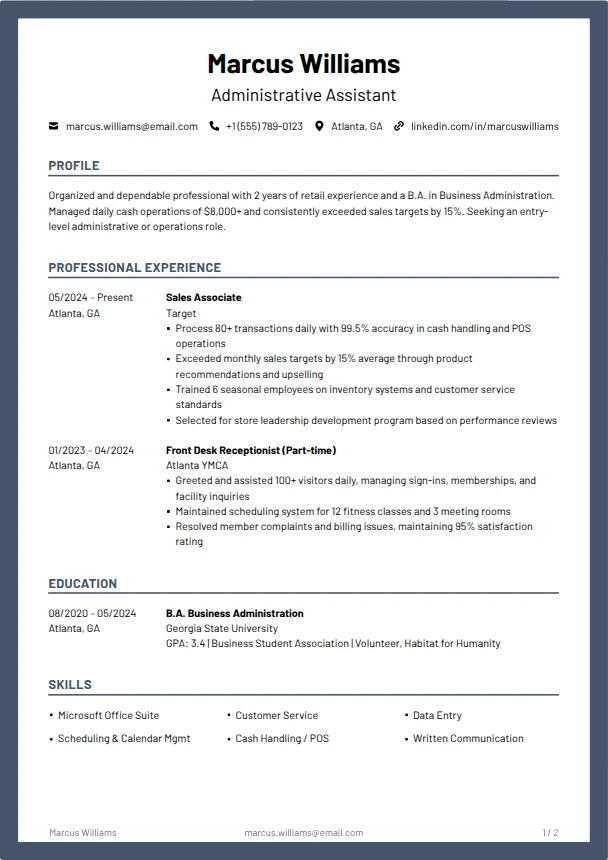
Each example uses a streamlined header with only the essentials. Notice the consistent formatting across all examples.
2. Summary or objective
The summaries in these examples avoid mentioning lack of experience. Instead, they lead with what the candidate has done and can do, then name the target position.
Strong: "Analytical economics graduate with capstone research in consumer spending patterns and proficiency in SPSS, Excel, and Tableau. Seeking an entry level data analyst position to apply quantitative research and visualization skills."
3. Education
These examples expand the education section to include GPA, relevant coursework, academic projects, honors societies, and study abroad details. This compensates for the missing work section.
4. Skills
Skills sections in these examples are categorized for clarity and tailored to the target role. Each skill listed corresponds to at least one bullet point elsewhere in the resume.
Analysis: SPSS · Tableau · Excel Pivot Tables · Survey Design
Communication: Report Writing · Presentations · Client Correspondence · Team Meetings
5. Experience / Activities / Projects
This is where these examples shine. Volunteer coordination, academic research, personal projects, and community involvement are all presented with professional formatting and achievement-focused bullets.
Strong: "Lead Researcher, Consumer Spending Analysis Project (Jan to May 2025). Designed and distributed a 30 question survey to 250 respondents, analyzed results using SPSS, and presented findings to a faculty panel, receiving recognition for methodology rigor."
6. Additional sections
Certifications, publications, languages, and technical tools round out these examples. Each additional section is chosen to reinforce the candidate's suitability for their target role.
Key skills to include
These skills appear across the examples below and are commonly requested in job postings for roles that accept candidates without experience.
Tip: Match each skill to evidence somewhere on your resume. If you list Tableau, include a bullet point about a project where you used it and the insight it generated.
Resume summary examples you can steal
Use one as a starting point, then swap in your own technologies, numbers, and achievements.
"Economics graduate with hands-on experience analyzing datasets of 10,000+ records using SPSS and presenting findings through Tableau dashboards. Seeking an entry level business analyst role to apply statistical modeling and data visualization skills."
Why it works: It quantifies the dataset size and names specific tools, making the academic experience sound like professional work.
"Self-taught UX designer with a portfolio of 8 mobile app prototypes built in Figma, including two projects completed for real small business clients. Applying for a junior UX designer position at a product-focused company."
Why it works: It differentiates practice projects from real client work and provides an exact count.
"Passionate community organizer with 600+ hours of volunteer service, including managing a 25 person volunteer team, planning quarterly fundraising events, and developing partnership proposals that secured $12,000 in donations. Seeking an entry level program coordinator role."
Why it works: It reads like a mid-level professional summary by quantifying hours, team size, and financial impact.
"Google Data Analytics and HubSpot Content Marketing certified professional with coursework in database management and digital marketing strategy. Seeking an entry level marketing analyst position to leverage analytics training and content optimization skills."
Why it works: It stacks two recognized certifications with relevant coursework to establish credibility without any job experience.
Writing strong experience bullets
Every bullet point should answer: "What did you do, and why did it matter?" Use this formula:
Before and after examples:
Made a website for a class project.
Designed and developed a responsive portfolio website using HTML, CSS, and JavaScript as a capstone project, earning the highest grade in the course and attracting 500+ page views in the first month.
Helped run a fundraiser at school.
Co-managed a university fundraising gala for 200 attendees, overseeing silent auction logistics, vendor coordination, and day-of volunteer management, raising $15,000 for student scholarships.
Did research for a professor.
Collected and coded qualitative interview data from 40 participants for a faculty research study on workplace satisfaction, contributing to a paper accepted for publication in a peer-reviewed journal.
Strong action verbs for resume with no experience examples resumes:
Analyzed · Built · Coded · Collected · Compiled · Designed · Developed · Directed · Evaluated · Implemented · Interviewed · Launched · Modeled · Organized · Produced · Published · Synthesized
7 mistakes that get resume with no experience examples resumes rejected
Submitting examples without changing the details
These examples are templates. Sending them with placeholder names, generic numbers, or content that does not match your real background will backfire if an employer asks you to elaborate.
Overinflating accomplishments
Be honest about what you did. Employers verify claims during interviews. It is better to describe a modest project accurately than to exaggerate and lose credibility.
Using inconsistent formatting
If one bullet point uses a period at the end, all of them should. If dates are right-aligned in one section, they should be right-aligned everywhere. Consistency is non-negotiable.
Burying the strongest content
Your most impressive accomplishment should appear in the top third of the resume. Do not hide your best material in the last section.
Including a skills rating system
Progress bars or star ratings for skills are subjective and meaningless. Either you have a skill or you do not. List it and back it up with a bullet point.
Writing dense paragraphs
Resumes are skimmed, not read. Use bullet points of one to two lines each. If a bullet exceeds three lines, split it into two.
Failing to customize for the ATS
Most companies use applicant tracking systems that scan for keywords. Pull exact phrases from the job description and incorporate them naturally into your skills and bullets.
What to do if you have no professional experience
These examples already demonstrate how to build a resume without experience. Here are four more strategies to add even more content:
Create a case study from a class project
Take your best academic project and write it up as a detailed case study. Describe the problem, your approach, the tools you used, and the results. This becomes both a resume bullet and a conversation piece in interviews.
Build a public portfolio
Whether you work in design, writing, coding, or marketing, a portfolio website gives you something to link from your resume. Even three to five pieces demonstrate capability and commitment.
Stack micro-certifications
Instead of one large certification, complete three to four short ones from different providers. This shows breadth of knowledge and fills your certifications section impressively.
Interview professionals in your target field
Reach out to people in roles you want and conduct informational interviews. You learn about the industry, build connections, and can reference these conversations in cover letters to show genuine interest.
Frequently asked questions
How do I make a no experience resume look professional?
Use a clean template, consistent formatting, and achievement-focused bullet points from non-work activities. Expand your education section, add certifications, and present volunteer work and projects with the same structure as paid employment.
Which sections should I include if I have no jobs to list?
Contact header, objective statement, education (expanded), skills, projects and activities, and certifications or additional qualifications. Together, these sections fill a professional one-page resume.
Can volunteer work replace professional experience?
Absolutely. Volunteer work demonstrates initiative, responsibility, and tangible skills. Format it exactly like a job entry with a title, organization name, date range, and accomplishment bullets.
How many skills should I list on a no experience resume?
Aim for 10 to 14 skills, organized into two or three categories. Ensure each skill is relevant to your target role and supported by evidence elsewhere on the resume.
Should I apply to jobs that say 'experience required'?
Yes, if you meet most of the other qualifications. Many employers list experience as preferred rather than mandatory, and strong resumes from motivated candidates without experience are still considered.
Skip the blank page
Open a complete, filled-in entry-level resume in our free builder. Swap in your own details, keep the wording that fits, and download as PDF, free.
Build your resume now
Choose a template, copy the structure from these examples, and create a professional resume that proves your value, no work history required.
Start Building, It's FreeRelated resume guides
Full guide to writing a resume when you have no formal work history.
Additional examples for professional entry level positions across industries.
More copyable examples for anyone writing their first resume.
Resume examples and tips for current college students seeking internships and jobs.
More resume examples: